Wednesday, April 15, 2009

What Happened at the Meeting With John Foran, Minister of Public Safety

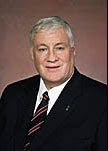
Hon. John Foran, NB Minister of Public SafetyToday we met with the Minister of Public Safety John Foran in Fredericton along with his Deputy Minister, Michael Comeau and Assistant Deputy Minister, Marc Leger. Also present was another person who never identified herself but we assume she must have been the Minister's Director of Communications.

We were there to talk about the "Worst Coroners Act in Canada", the New Brunswick Coroners Act.

Accompanying us to the meeting was Debbie Harquail, whose sister Leona Harquail was the subject of a Coroners Inquest last year. Debbie has been highly critical of the Inquest process, which she says failed her sister Leona. She is very supportive of our struggle to have the Coroners Act changed. She knows better than anyone else exactly what happens at a Coroners Inquest and can speak from personal experience about its shortcomings.

As you will read below, we realize that there is no chance the Coroners Act - which is 110 years old this year - will be changed in time for the Inquest into the death of our sons Daniel and Javier. We have accepted that it's not going to happen in the next two weeks.

But that doesn't mean the Minister cannot commit to making changes to the Act in the future and most importantly, undertaking a comprehensive review of the Act, with a view to bringing it into the 21st century - like most other provinces have done. When we asked the Minister if he would consider a review of the Act, he said NO, he cannot commit to a review of the Act.

However, we know that governments, and Ministers, are like the changing seasons. They come and they go, reliably, and with a regular frequency. Time will tell when this Act will change, but if there is one thing that everyone connected with this issue can be certain of, is that we will NEVER GIVE UP. In fact, we have only JUST BEGUN. The Inquest begins in two weeks. We have a lot of work ahead of us and one of our main goals is to make sure that everyone knows how flawed New Brunswick's Coroners Act is and how it is, unfortunately, going to fail our boys miserably.

This is what our media liason, Jim Lavoie, said to the Minister at the meeting, word for word. It is the exact same thing he read to the media at the press conference that was held at the Crown Plaza earlier in the afternoon.

Meeting with the Minister of Public Safety
April 15, 2009

I am Jim Lavoie, and I am going to speak about the changes that Isabelle, Ana and Debbie want to make to the Coroner’s Act.

First of all, I’d like to make it clear that I have no stake in this case, other than as a friend of Isabelle and Ana, and today I have just met Debbie Harquail. They have asked me to speak on their behalf.

We have your letter of March 11 and there are a number of points that you raise which we must retort.

 First, you say that the government does not intend AT THIS TIME to amend the Coroner’s Act to provide standing to interested parties.

 Second, you say that that the existing legislation is entirely adequate to ensure juries make fully informed recommendations.

 Third, you say that it meets the needs of New Brunswickers even though it is 110 years old.

The reasons you give are that existing procedures present no barriers to getting at the true circumstances of a death. You also say they present no barrier to articulating recommendations.

We completely disagree. Here is one very strong example as to why people like Isabelle, Ana and Debbie need standing at a Coroners Inquest.

As “interested parties” who have to submit questions to the Coroner, Isabelle, Ana and Debbie can tell you how difficult, if almost impossible, that task IS for the ordinary, person with no legal background.

It takes a superhuman effort, for someone like them, with no training, no understanding of laws, rules, regulations, and policies to try to decipher the jargon of the legal profession and to make sense of it so they can ask a question that actually gets to the root of the matter.

Isabelle and Ana have had to become almost experts in the Education Act, the Motor Vehicle Act, the Transportation Act, the Coroners Act, the Fatal Accidents Act, not to mention the ever-changing menu of policies, rules and regulations.

It is a David and Goliath effort.

In comparison, the Coroner has a team of professionals on his side to help him during the Inquest. He also has access to documents, for example, the RCMP Report of November 12, 2008, which has been denied to Isabelle and Ana and which Isabelle had to request under the Freedom of Information Act through her lawyer at her own cost. There is no telling when she will receive this report. It is unlikely she will get the report before the Inquest.

The RCMP says there is confidential information in the document which they cannot see. What is that supposed to mean? These are parents who buried their children. They have seen the worst that can possibly happen and they are not afraid of what might be in a report. They do not need to be protected from anyone.

This just proves that they need the help of a lawyer to navigate their way through the Inquest. They have no idea what the Coroner is doing except what he chooses to tell them from time to time and that isn’t much.

They have nobody to help them formulate their questions without spending thousands of dollars on a lawyer.

This is not a level playing field in any way whatsoever and to imply that it is by saying everything is all right is disingenuous.

Unlike the Coroner, Isabelle, Ana and Debbie had nobody but themselves to rely upon in developing their line of questioning and the sheer determination not to give up because to do so would be to betray the memory of their loved ones.

I have to give it to them. They have done an incredible job, no thanks to the government or any one else. They have become experts despite all the roadblocks in their way.

I have more than twenty years experience in the Federal government in program management dealing with policy and I can’t figure out these legal documents.

I don’t know how these women have managed to get as far as they have without giving up entirely.

We know that time and circumstances change government attitudes and actions. Certainly, when the Ontario government changed its Coroners Act it had its naysayers too.

So too did all the other provinces which have updated their Coroners Acts.

Time changes everything and Isabelle, Ana and Debbie have lots of time, the rest of their lives in fact, to lobby for changes to New Brunswick’s Coroners Act and you can be sure that is exactly what they intend to do. Long after you are back in civilian life, if this Act has not been changed, you will still be hearing from Isabelle, Ana and Debbie.

We therefore, take your statement in the most positive fashion to mean that there may be a time in the future when you do intend to amend the Coroner’s Act to provide standing for interested parties like Isabelle, Ana and Debbie.

We also take it to mean that there will come a day when jury’s recommendations are binding, because, we are sorry to say, we do not agree with you whatsoever in your defense of that practice. It is indefensible with so many lives at stake.

We know that you are going to have to face the day when the Coroners Act has to be changed. It might not be you. It might be another Minister of Public Safety, but we have started the ground work now, and we are starting this whole discussion with you on that premise. It has to change and it’s going to change. It’s just a matter of time.

Only New Brunswick, Yukon and Newfoundland have not updated their Coroners Acts. Seven provinces and three territories have.. We are not experts, but we know that there are plenty of experts on staff at the Law Reform Branch who can understand and interpret the laws that have changed in those provinces and territories over the years and who can, under your direction, undertake a comprehensive review with a view to reforming the NB Coroners Act, as has already been done in all the other provinces.

It is the first step - a comprehensive review of the NB Act with a view to updating - as has been asked for many times by the Canadian Bar Association, New Brunswick Branch. We know that as recently as last April, 2008, that the NB Branch wrote to you personally with a suggestion that could have easily started the province on this path of law reform. I quote the letter from David O’Brien, which was written on the eve of the passage of Bill 48, an Act to Amend the Coroners Act.

1) To amend Bill 48 to create standing for victims and other interested parties at inquests, and;
2) Initiate a comprehensive review of the Coroners Act with a view to modernizing as almost all other provinces have already done.

It is too late now to Amend Bill 48 as it has already passed without the CBA’s suggested amendments above. It was a missed opportunity. However, that does not preclude you from introducing an amendment to the Act to create standing and or initiating a comprehensive review of the Act.

We know that you are reluctant to update the Coroners Act. However, we know that time changes everything. In two weeks, your department and the province of New Brunswick will be under a national and international microscope when the Coroners Inquest into the deaths of Javier, Daniel, Codey, Nathan, Justin, Nick, Nicky and Beth. We will be there every day and we will be speaking out every day on the need for changes to the Coroners Act and for a comprehensive review.

Every day we will have another reason to tell the world why New Brunswick’s Coroners Act is outdated and needs to be brought into the 21st century and we intend to make sure that the world knows that this Inquest is doomed to fail right from the very start.

Letter from John Foran in which he refuses to amend the Coroners Act

March 11, 2009

Dear Mrs. Acevedo and Mrs. Hains:

Thank you for your e-mail of February 9, 2009. As you know, your e-mails to several other ministers and officials have been forwarded to my attention as well.

Before addressing your e-mails directly, I wish to tell you once again, my heart goes out to the two of you and your families, and the six other families who lost loved ones on January 12, 2008. I know that your loss is incalculable, and applaud your efforts to make sense of it, and find lessons that can be learned so as to avoid similar tragedies in the future. I pray that both of you are able to find some measure of peace in the weeks, months and years ahead.

From your several e-mails I have observed three key themes in relation to the Coroners Act:

- The Act should be amended to grant to interested parties, including the families of the deceased, standing at inquests.
- The Act should be amended to make the recommendations that arise from inquests mandatory.
- The Act is 110 years old, and does not meet the needs of modern New Brunswick.

I will address each of these in order.

The government does not intend at this time to amend the Coroners Act to provide “standing” to interested parties. This would mean that in addition to the witnesses called by the presiding coroner, and the questions posed to those witnesses by the crown prosecutor, other interested parties would be entitled to cross-examine these witnesses, to call their own witnesses, to cross-examine witnesses called by other interested parties, and to advance recommendations to the jury.

You are correct in noting that the Canadian Bar Association – New Brunswick Branch has advocated for such an amendment. From time to time, my predecessors and I have heard this from individual litigation lawyers as well.

As you may know, the presiding coroner and the crown prosecutor prepare for inquests in consultation with interested parties, and they consult parties (and their counsel, if they wish) during inquests. They will elect to avoid duplicative questions, and questions that do not go to the purposes of the inquest, which are to establish the cause of death and to learn enough about the circumstances of the death to articulate recommendations as to any action that should be taken to prevent future injury or death in similar circumstances. For example, questions that aim at assigning legal responsibility for a death to any person are beyond the scope of an inquest, properly before a court of criminal or civil jurisdiction, and these will be avoided.

In short, the experience of successive chief coroners of New Brunswick has been that the existing procedures present no barrier to getting at the true circumstances of a death, and no barrier to articulating recommendations.

You have written that, in the inquest into the incident that resulted in the deaths of your sons, you want answers to your questions. I encourage you to advance all questions to the presiding coroner and crown prosecutor. I am assured they will put to witnesses before the jury every question that is within the proper scope of an inquest.

You have written also that you want recommendations from a fully informed jury. I am confident that the existing legislation and process is entirely adequate to ensure juries are fully informed as to all relevant facts.

Although you did not mention the issue in your e-mail to me, in writing to the Office of the Attorney General you mentioned you are also concerned that jury recommendations “are not binding”, and that “there is no follow up” from inquests.

We are concerned that if jury recommendations were made binding, jurors may focus on issues as to the operational feasibility of potential recommendations, and might restrain themselves from making recommendations out of concern for questions related to implementation. It is better, in our view, for juries to be unfettered by such concerns, and to leave questions of cost and practicality of implementation to the expert organizations that are the subject of recommendations. Second, we believe strongly that public policy decisions are best made by officials and institutions that are directly accountable to the public.

I must also point out that the fact that the law does not mandate implementing recommendations of coroner’s juries does not mean that “there is no follow up” to the recommendations. The Chief Coroner is required by law to report all recommendations to any person or institution, government or private, that he or she “has reason to believe … should be concerned with the subject matter”. The Chief Coroner is also required to report annually to the Legislative Assembly, and by that means reports on all inquests, including recommendations and the responses received from parties to whom recommendations were sent. This process assures transparency, and creates pressure on those who receive recommendations to respond in a meaningful way.

Finally, I wish to correct the proposition that the Coroners Act does not meet modern needs. While I am told that it is true that its original form dates back some 110 years, it has been amended many times to meet changing needs. In fact, I am advised that the Legislative Assembly has amended the Coroners Act twenty-four times in the past thirty-five years: the Act is not today in its 1899 form.

In closing, I wish to thank you for writing, and once again, to express my hope and prayer that both of you will find peace in the wake of the terrible loss each of you has suffered. I would be happy to meet with you at your convenience should you wish to voice your concerns in person.

Yours sincerely,


Hon. John W. Foran

Minister of Public Safety and Solicitor General

Sunday, April 12, 2009

Basketball Coach who Put Children's Safety First Given $172 Fine: Failed to keep log of his trip

Belledune Village busBrice Noel, a part time basketball coach from Jacquet River, New Brunswick, whose quick thinking saved the lives of 14 young players in February when the wheel flew off the passenger van he was driving, has been fined $172 by the Department of Public Safety for failing to keep a log of his pre-trip inspection.

Mr. Noel said in an interview today that he was called to a meeting with two representatives of the Department of Public Safety in Bathurst on Friday, March 20. DPS employee, Stephen McIsaac, Supervisor, Commercial Vehicle Enforcement, told him that he was being charged for not recording the pre-trip inspection in a log book.

According to the Motor Vehicle Act, any person operating a 10-passenger van or multi-functional vehicle must keep a log that includes mileage, time and date of travel and confirmation of a pre-trip inspection.

"I was shocked," says Mr. Noel, of the move by DPS officials to charge him with a MVA infraction. "Some people told me I should get an award. Instead, I got a fine."

Noel says McIsaac told him that he didn't want to give him the fine but he had no choice. "There are going to be lots of changes coming," he told Mr. Noel who recalls that Mr. McIsaac also said "the government wants to charge somebody and since I had a Class 1 license I should have known better and they had to make an example of me."

Mr. Noel has a Class 1 license, which allows him to drive transport trucks. He is fully aware that logbooks are required for transport trucks, but he was unaware that there was a logbook for the Village of Belledune bus, which seats 24 persons.

He says he has been driving the Belledune bus for three years without incident and has never filled out a logbook. "I can confirm that there was not any logbook in the bus," insists Mr. Noel. "And no other driver whom I have spoken to has ever filled out a logbook because nobody was ever told about this requirement. We just take the bus and drive."

Mr. Noel feels that he is being made a scapegoat by the DPS because he told the truth about what happened to the media in the days following the incident. He asked if all the other people who drove the vehicle and never filled out a logbook are also going to get fined by the DPS?

"I'm one of only two people I know who actually did a pre-trip inspection of the bus and I'm the one who gets fined. There is no justice."

Mr. Noel's ill-fated trip with a busload of young students to a weekend basketball tournament in Hartland, NB attracted national attention when the wheel of the passenger van he was driving flew off and rolled ahead of him on a rural stretch of highway between Hartland and Woodstock.

It was Sunday, the day after Valentine's Day, and the team was returning home to Jacquet River from Hartland when the bus would not start.

"I got a boost because the alternator wasn't charging," explained Mr. Noel. After the boost, the team started out for Jacquet River but he noticed that the alternator still wasn't working properly.

"At this point, I had a choice to keep driving to Jacquet River in an unsafe vehicle with a busload of children or to turn around and go back to Woodstock, which was the closest town, and get the vehicle checked by a mechanic."

Mr. Noel drove the van slowly along the rural road to Woodstock. It was during that short trip that the vehicle started shaking and all of sudden, to their complete horror, the back wheel flew off the van, rolling ahead of them and into a ditch as they proceeded down the road. Mr. Noel immediately stopped the vehicle.

"Everyone was scared, the children were terrified. We were all thinking of the Boys In Red," says Mr. Noel, referring to the Bathurst High School Phantoms basketball team tragedy of January 12, 2008 in which seven players and the coach’s wife were killed.

Luckily, others who had been at the tournament in Hartland were driving by and recognized the bus along the side of the road. It's hard not to notice the vehicle, with the words "Belledune" emblazoned along the front. Mr. Noel explains that the people stopped, picked the team members up and brought them into Woodstock where he contacted the authorities.

By the next day, the story was all over the media in New Brunswick and soon hit the national news, evoking memories of the Bathurst tragedy which had just marked it first anniversary the month before.

Ironically, in the week preceding the journey to Hartland, Mr. Noel insisted that the van be inspected because he wanted to be certain that the bus was in tip-top shape before he drove the team to the basketball tournament. He brought the bus into the garage in Belledune on Thursday, February 12.

"They checked the air pressure on the tires, the belts, the engine and it was low on oil so they had to put a quart of oil in it. I was satisfied that it had been inspected properly and so on Friday we left with the team for Hartland, but not before I did a visual pre-trip inspection which was witnessed by some of the parents," he said. Apparently, that visual inspection was not good enough for the DPS. “It had to be recorded in a logbook,” says Mr. Noel.

After the wheel flew off, the Department of Transportation did a thorough inspection of the vehicle. Mr. Noel says he doesn't know what conclusions they have come to but he heard that the van will be brought to the University of New Brunswick in Fredericton to be reviewed by the team led by Frank Wilson. This is the same group that did the Federal Department of Transport accident reconstruction report on the Bathurst Phantoms passenger van last year.

Mr. Noel and the parents who were with him on the journey were so surprised by the charge that they paid it immediately through the basketball funds, rather than challenging the DPS.

"I was personally torn between paying the fine and challenging the DPS," says Mr. Noel. But in retrospect, he feels that it was better to pay the fine and publicly take responsibility for violating the MVA if it means that it raises awareness of this very important transportation safety rule - keeping a log of the pre-trip inspection.

He also wants to support the Bathurst mothers who are advocating for changes to the Department of Education's school transportation policies. "If it helps Isabelle Hains and Ana Acevedo to achieve their goals of improving safety by enforcing the laws, then I have no problem paying the fine and speaking about it to anyone who asks," says Mr. Noel.

However, he says that he would also like to see the people who are responsible for enforcing the laws be held to task for failing to do their jobs all these years. "It's been more than a year since the Boys In Red were killed and they're only enforcing these laws now? Something is seriously wrong when more than a year later nothing has been done from the province all the way down to the municipal governments who own these vehicles."

Interestingly, in February 2007, Mr. Noel took the same Belledune Village bus to Moncton with another parent and coach and the youth basketball team to see the Harlem Globetrotters play. On the way back, the weather started to turn bad. As they reached the Miramichi he felt that they should take a motel rather than proceed in dangerous driving conditions to Jacquet River.

Mr. Noel contacted the RCMP to confirm his opinion that the roads were too poor to travel on and he was told that the roads were slippery and unsafe for driving. He was advised to stay where they were. Based on that information, the children and adults stayed in a motel in Miramichi and proceeded to Jacquet River the next morning when the weather had cleared. They had to pay for the hotel themselves.