Wednesday, September 23, 2009

Feds 'negligent' for not warning about passenger vans: B.C. inspector

By Richard Foot, Canwest News Service

September 23, 2009

(Click here to read the full article)

Bryan MurphyA British Columbia motor-vehicle inspector and mechanic is accusing Transport Canada of "negligence" for failing to educate the public — particularly the parents of schoolchildren — about the dangers of 15-passenger vans.

"Transport Canada has not issued any recommendations against using these vans. They're passing responsibility to the provinces and the school districts, and I think that's short-sighted thinking," said Bryan Murphy, a licensed vehicle inspector who works as a school bus mechanic and driver with School District 68 in Nanaimo, B.C.

"Transport Canada is negligent in not addressing this issue and bringing it to public attention."

Seven high school basketball students and a teacher were killed in 2008 when their 15-passenger van slammed into a transport truck in New Brunswick.

A coroner's inquest into the tragedy recommended that 15-passenger vans — called "death traps" by a U.S. consumer watchdog agency — be banned for student travel across Canada.

"I don't want to see more blood on our highways before people are finally made aware of the dangers of these vans, but it seems that's what it will take," said Murphy... Click here to read the rest of the article.

Friday, September 18, 2009

B.C. mom joins fight to ban 15-seat vans

By Richard Foot, Canwest News Service

(Click here to read full story in the Victoria Times Colonist)

September 18, 2009

Stella GurrA grieving British Columbia mother has joined forces with the families of the seven boys killed in last year's infamous high school van crash in New Brunswick, adding her voice to their struggle for safer student travel laws and a nationwide ban on 15-passenger vans.

One year ago next week, 26-year-old Michael Benedetti Gurr was killed when the Ford 15-passenger van he was riding in flipped several times on the Trans-Canada Highway near Brandon, Man.

His mother Stella Gurr, who lives in Nanaimo, B.C., says her son — like the seven boys in New Brunswick — would be alive today if the federal government had banned the sale of the crash-prone vans in Canada.

She has spoken to some of the New Brunswick parents and promised to support their campaign to have the provinces, and Ottawa, implement the safety recommendations of a coroner's inquest into the high school tragedy.

Chief among the recommendations is that 15-passenger vans should be banned for student travel, and children should only be driven to extra-curricular school events in certified minibuses or school buses with professional drivers.

Gurr says governments should go even further, and ban 15-passenger vans not only from schools but for all passenger purposes.

"I called one of the parents last week and said: 'You know, you're fighting over there and I have my own battle over here. We should work together.'"

Michael Gurr, a former football player for Champlain College in Quebec, was a drummer for the Vancouver rock band The Hotel Lobbyists. Click here to read the rest of the article in the Victoria Times Colonist

This article also appeared in the Nanaimo Daily News on September 19, 2009. Click here to read the article.

Tuesday, September 15, 2009

MP calls for nationwide ban on 15-passenger vans

By Richard Foot, Canwest News Service

September 15, 2009

Click here to read the full article in the Calgary Herald.

Yvon GodinCanada should have a nationwide prohibition on the transport of school-children in crash-prone 15-passenger vans, says New Democrat MP Yvon Godin, who wants to introduce legislation in Parliament creating a ban.

"I would like to introduce a bill for Transport Canada to ban those types of vans for children in schools," he says. "What is more important than the safety of children?"

Two years ago, eight of Godin's constituents — a high school teacher and seven teenage basketball players — died when the 15-passenger van they were riding in swerved out its lane and collided with a transport truck near Bathurst, N.B.

In May, a coroner's inquest into the tragedy said 15-passenger vans should be outlawed for school-children across the country. However an investigation this summer by Canwest News Service shows the lessons of the accident have largely been ignored.

The vans remain in widespread use by dozens of school districts across Western Canada and Ontario, and are only legally outlawed for school use in Quebec, New Brunswick and Nova Scotia.

A 2008 survey by B.C.'s Ministry of Education found 15-seat vans were in use at more than half the province's 60 school districts.

Twelve-and-15-passenger vans are considered so unsafe they are banned for the transport of children in more than 30 U.S. states. Federal U.S. law also outlaws the sale of the vans to schools and daycares.

The vans were originally designed as cargo vehicles and don't have the safety features of most passenger cars.

They are prone to loss of steering control at high speeds and are more likely to suffer rollover crashes than any other vehicle, according to the U.S. National Highway Traffic Safety Administration.

They have been labelled "death traps" by the Safety Forum, an American consumer watchdog agency.

Godin, who met this week with three of the families that lost sons in the New Brunswick accident, says it's time for the federal government to act.

"If New Brunswick, Quebec and Nova Scotia can ban the vans in those provinces, why can't the rest of us?" He says. "And why can't Transport Canada ban those types of vans for children?"

Transport Canada has done little to restrict the vehicles since the 2008 tragedy.

Transport Minister John Baird has declined to be interviewed on the subject. His department says the 2008 accident was not caused by the van-type itself, but by slippery roads, poor vehicle maintenance and driver error.

Transport Canada also says vehicle use is not its concern, but a matter of provincial jurisdiction.

However, Godin says Transport Canada is responsible for the importation of vehicles, as well as vehicle safety standards, and could pass a law similar to the one in the U.S., banning the purchase or leasing of 15-passenger vans by schools.

"Something could be done by the federal government. They could put restrictions on the vans." Click here to read the rest of this article in the Calgary Herald.

Saturday, September 12, 2009

Ottawa Citizen Asks: Is Anybody Listening?

After the 2008 highway tragedy that killed seven members of a high school basketball team, a coroner's inquest came up with a compelling set of best practices for extracurricular travel at Canadian schools. So why have none of the safety recommendations been adopted? Richard Foot investigates.

(Click here to read the full story in the Ottawa Citizen)

Across Canada this academic year, schools will send millions of children to extracurricular activities in vehicles considered unsafe, and with drivers deemed unqualified by a coroner's jury that examined the deaths of seven high school athletes in 2008.

Nearly two years after the tragedy, only Quebec and New Brunswick have made significant changes to the way children travel to off-site school events.

A Canwest News Service investigation also shows that the changes called for by the inquest in May are being largely ignored. None of the major safety recommendations has been adopted by the federal government, or any province.

Every provincial government, plus 37 urban and rural school districts from coast to coast were surveyed. Many school districts reported tightening travel policies in the wake of the accident. Yet research reveals a hodgepodge of practices and standards across the country.

For example, some jurisdictions don't require snow tires or ask volunteers or teachers to have specialized training before driving students. Some demand twice-a-year inspections on vehicles, others settle for occasional inspections.

Only Quebec, New Brunswick and Nova Scotia ban schoolchildren from travelling in 12- and 15-seat passenger vans -- the type that crashed in 2008 -- called "death traps" by the Safety Forum, a U.S. consumer watchdog.

Canwest also surveyed the inter-schools athletic associations in all 10 provinces, none of which has made efforts to minimize the amount of winter travel required of high school teams, despite a call by the inquest for safer winter game schedules.

"Our lives are beyond repair since that horrible night," says Isabelle Hains, one of seven mothers who lost sons in the accident. "My hope was that their death could lead to a lot of changes for every school across the nation, but I sometimes wonder, is anybody listening?"

Schoolchildren in Canada are subject to two different, and contradictory, legal standards on transportation. The law in every province requires school boards to use only yellow school buses -- the safest vehicles on the road -- when transporting students between home and school. About 36,000 yellow school buses take 2.5-million students, more than half Canada's kindergarten to Grade 12 population, to school every day, according to the trade journal School Transportation News.

Some provinces also allow municipal transit buses, and permit smaller vehicles to pick up students in remote, rural areas.

In every case, a tough regulatory regime governs the system. In contrast, a regulatory vacuum surrounds school transport to sporting events, band performances, field trips and other activities.

"Why don't the same rules apply?" asks Hains. In January 2008, 17-year-old Daniel Hains and six other members of the Bathurst High School basketball team were killed, along with the wife of their coach, when their van collided with a transport truck as the team was driving home late at night from a game.

"It's hard to put into words the shock waves it sent through the school-sporting community across the country," says Stephen O'Rourke, a longtime coach and athletic director at Fredericton High School.

(Click here to read the rest of this story in the Ottawa Citizen)

Wednesday, September 9, 2009

'Death traps' still popular in most provinces

Only Quebec, New Brunswick and Nova Scotia have banned schools from using vans. The other provinces say it's not up to them to tell schools what vehicles they can use

By Richard Foot, Canwest News Service

(Click here to read the full article in the Calgary Herald)

September 9, 2009

Bathurst Phantoms Van January 12, 2007 Photo by Sandor FizliDozens of school districts in Canada are still transporting children to extracurricular events in 12- and 15-seat passenger vans, nearly two years after a deadly New Brunswick accident brought the dangers of those vans to the nation's attention.


All but three provinces — Quebec, New Brunswick and Nova Scotia — still allow schoolchildren to travel in the vans, called "death traps" by the Safety Forum, a U.S. consumer watchdog.


The federal government also hasn't restricted the sale or distribution of the vans Canada, even though U.S. federal law bans their sale for the purposes of child transport, and more than 30 American states prohibit schools or daycares from using them.


Seven high school students and a teacher were killed in New Brunswick in January, 2008 when the 15-seat van they were driving in swerved out of control and collided with a transport truck.


In the weeks after the crash, education officials in several provinces promised to review the use of 15-seat vans. At the time, only Nova Scotia banned schools from using them — a rule enacted in 1994 after a 15-seat van crashed in Nova Scotia, killing three young hockey players and a parent.


So far only Quebec and New Brunswick have followed suit. The others say it's not their responsibility to dictate to schools what vehicles they can use.


A survey by Canwest News Service of 37 school districts across Canada found seven districts, 19 per cent of the sample, that still used 12- or 15-seat vans to drive children to extracurricular events. Click here to read the rest of the article in the Calgary Herald.

Tuesday, September 8, 2009

The dangers of 15-seat passenger vans.

Why are 15-seat vans so dangerous?

Click here to read the full article.

Twelve- and 15-seat vans were originally designed by Chrysler, Ford and General Motors as cargo vans. In the 1970s, the vans were extended in length and equipped with seats to meet a growing market demand for a vehicle that could carry more than 10 passengers.

Yet the design was never modified to include steel side plates, roof reinforcement or laminated windows, to protect passengers during a rollover or collision.

``They don't have the normal safety features of a family minivan,'' says U.S. lawyer and van safety expert Richard Gergel. ``The side of a 15-passenger van resembles more of a pickup truck.''

Click here to read the rest of this article.

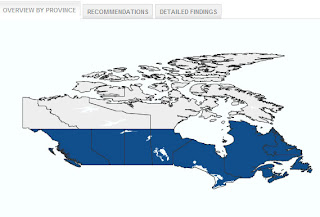
This map and sortable table show an overview of the findings for each province

This map and sortable table show an overview of the findings for each province and a summary of the 13 Bathurst inquest recommendations that are relevant for schools throughout Canada.

Click to view map.

Map of Canada Overview

Precious Cargo: Keeping our school kids safe

Seven high school basketball players and a teacher were killed in one of Canada's worst school tragedies in January 2008 when the van carrying them home from a routine road trip collided with a transport truck near Bathurst, New Brunswick.

In May 2009, a provincial coroner's inquest into the accident revealed serious safety flaws with the way children travel to extracurricular school events, and recommended a series of changes by provincial governments across the country.

As a new school year begins, what, if any, changes have been made? Canwest News Service investigates.

Click here for full story.

CANWEST Investigation shows hodgepodge of safety standards plagues extracurricular activity vehicles

Part 1 in a three-part series investigating what changes have taken place nationally since the 2008 crash that killed 8 high school basketball players in New Brunswick

Across Canada this academic year, schools will send millions of children to extracurricular activities in vehicles considered unsafe, and with drivers deemed unqualified by a coroner's jury that examined the deaths of seven New Brunswick high school athletes in 2008.

Nearly two years after the tragedy, no province except Quebec and New Brunswick has made significant changes to the way children travel to off-site school events.

A Canwest News Service investigation also shows that the changes called for by the inquest in May are being largely ignored across Canada. None of the major safety recommendations has been adopted by the federal government, or any of the provinces. Every provincial government, plus 37 urban and rural school districts from coast to coast were surveyed. Many school districts reported tightening up their travel policies in the wake of the Bathurst accident. Yet the research still reveals a hodgepodge of practices in place across the country, and large differences in safety standards from one district to another.

Click here to read full story.

Monday, September 7, 2009

The van debate: what cost a student's life?

Ron Campbell was dumbfounded in January 2008 when news broke that seven students and a teacher had died in a 15-seat van while driving home from a high school basketball game in New Brunswick.

The tragedy shocked many, but for Campbell it hit particularly close.

He and other volunteers — all experts in school bus transportation — had for several years been working with the Canadian Standards Association, writing the country’s first national standard for a safe, extracurricular school vehicle, designed to replace 15-seat vans.

“The people around the committee table were really speechless,” says Campbell, a school bus industry salesman.

Click here for full story.